The MISSION4WATER project is focused on environmental protection, specifically reducing pollution through the development of innovative solutions by small and medium-sized enterprises (SMEs) in the Adriatic-Ionian region, aimed at reducing the dispersion of pollutants in natural waters. One of the most significant activities of the project is to create “Innovation Co-Labs” through synergy between companies, research institutions, and public bodies, with the goal of implementing pilot activities to develop new forms of initiatives for raising citizen awareness and developing new solutions for water filtration and purification in order to address environmental protection and sustainable development challenges.
Specific objectives of the project
Main expected results
The Strategy will build on the effective needs collected at the regional level with diverse stakeholders and create the blueprint to foster open innovation among actors of the quadruple helix (SMEs and clusters or representatives of SMEs, possibly large companies; universities and other research institutes; governmental authorities; civil society) in the IPA ADRION region.
The outcomes of the use cases will demonstrate the validity of the proposed model. In total, at least 18 use cases will be developed thanks to the collaboration of at least 40-50 organizations.
PARTNERS
Associated partners
Boosting the circular economy of the textile sector in the Mediterranean
Seville, XX April 2024. According to data from the European Union (EU), citizens generate 12.6 million tonnes of textile waste per year, of which only 22% is collected for reuse or recycling. In addition, and as stated by the United Nations (UN), the textile industry consumes large quantities of water, and is also the second most polluting industry after the oil industry.
For this reason, the European VERDEinMED project, ‘PreVEnting and ReDucing the tEXtiles waste mountain in the MED area’, has started its work to reduce textile waste in the Mediterranean region. The initiative, co-funded with nearly € 3 million by the EU Interreg Euro-MED programme, held its first consortium meeting in February in Kastoria (Greece) to define the next lines of action.
“Mediterranean countries face a common challenge of water scarcity, so in VERDEinMED we will focus on improving the sustainability of the textile and clothing value chain, promoting better use of resources and reducing its carbon footprint,” says Chrysovalantis Ketikidis, research associate at the Centre for Research and Technology-Hellas (CERTH) in Greece and coordinator of the project.
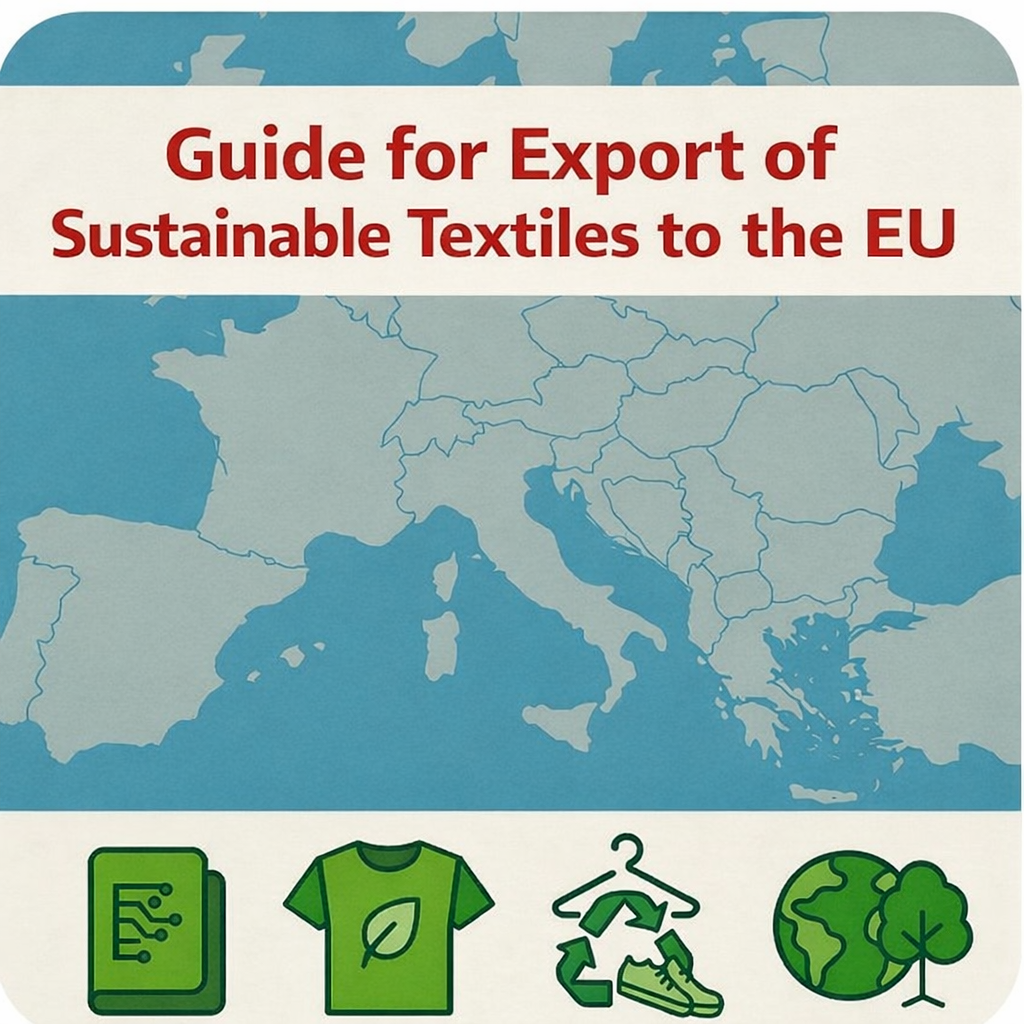
In addition, VERDEinMED will dedicate its efforts to the textile industry, supporting the adoption of processes and technologies focused on the circular economy. Aligned with the Waste Framework Directive, which mandates a separate collection of textiles by 2025, and with the EU Strategy for Sustainable and Circular Textiles, the project aims to create an innovative model of production and consumption patterns. Thus, VERDEinMED will seek a positive impact on society, the environment, and economics by proposing cost and resource efficient processes.
The VERDEinMED project is an initiative to promote the circular economy of the textile sector in the Mediterranean region. It aims to boost sustainability and circularity in the textile value chain, focusing on policy makers, businesses and consumers. VERDEinMED’s activities will be based on the Verde Bussola, a compendium of tools and knowledge to boost sustainability and circularity in the textile sector. In addition, the project will establish regional hubs, generate a Knowledge Platform and create a support service to industry, consumers and policy makers.
Tools to promote circularity
The VERDEinMED project is one of the 14 thematic projects of the Interreg Euro-MED Innovative Sustainable Economy Mission programme, and one of the two approved projects addressing the circular economy. Over the course of 33 months, its partners will develop tools to facilitate the transition to circularity and sustainability in the textile and clothing sector, covering critical issues such as industrial production techniques, consumption habits, and reuse and recycling options.
The creation of a Green Compass (Verde Bussola), understood as a compendium of the tools and knowledge generated in VERDEinMED, will be the basis for integrating the different activities to be developed by its partners. These include the creation of regional or national hubs, the establishment of a knowledge platform and the creation of a support service for businesses, policy makers and citizens.
25 Mediterranean entities
The VERDEinMED project, launched in January 2024, brings together 10 partners and 15 associated entities including research centres, companies, non-governmental organisations, public administrations, clusters and cooperatives. The 10 partners are located in 7 countries: Bulgaria, Greece, Italy, Northern Macedonia, Portugal, Slovenia and Spain.
In addition, the project has 15 associated partners who will spread the VERDEinMED message in the Interreg Euro-MED cooperation area. With the collaboration of institutions from Belgium, Lebanon, Tunisia and Turkey, 11 countries are involved in the initiative.
Below is the list of partners and entities associated to the project.
Partners:
Associated partners:
Total budget of the project € 2 848 602,00.
Project duration 33 months.
Interreg funds € 2 278 881,60.
Visit our website verdeinmed.interreg-euro-med.eu
Текстилно Трговско Здружение - Текстилен кластер
Ул. Македонија бр. 19, кат 2, Скопје
Email: ttatextileclusterofficial@gmail.com
Тел: + 389 75 304 685