
Workshop on topic:Responsible Behaviour in the Fashion Industry in the Context of Microplastics – Organized by the TTA - Textile cluster
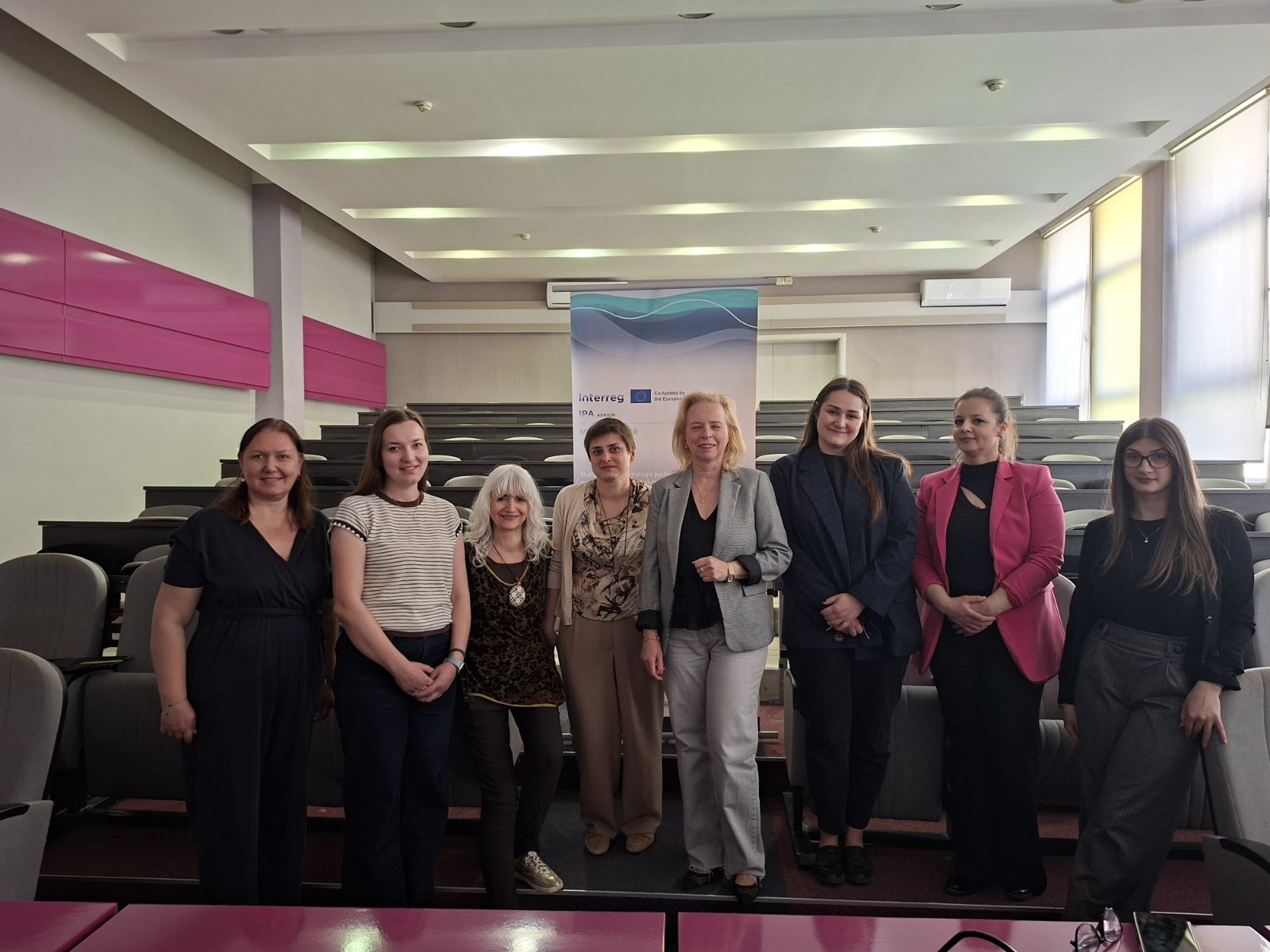
On 6 May 2026, the Textile Trade Association – Textile Cluster (TTA-TC), in cooperation with the Faculty of Technology and Metallurgy in Skopje and the Institute of Textile Engineering, successfully organised a workshop within the framework of the EU-funded MISSION4WATER project titled “Responsible Behaviour in the Fashion Industry in the Context of Microplastics”. The workshop brought together students, professors, and researchers with the aim of addressing microplastic pollution and its wider environmental impacts on water, food, and ecosystems, while promoting sustainable practices in the textile sector.
The event served as a multidisciplinary platform combining scientific presentations, practical training, and an interactive panel discussion, fostering knowledge exchange between academia and applied research in sustainable textile development.
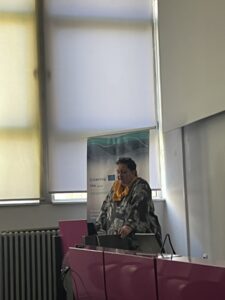
The workshop opened with a series of expert presentations focusing on key sustainability challenges in the textile industry. The MISSION4WATER project was introduced by Natasha Sivevska, highlighting its objectives and opportunities for engagement of academic institutions and young professionals. This was followed by a scientific overview of microplastics delivered by Prof. Dr. Vesna Dimova, who explained their sources, distribution, persistence in the environment, and growing ecological significance.
Further presentations included modern sustainable fashion design approaches by Prof. Dr. Lidija Georgieva, focusing on circular design principles and environmentally responsible material selection. Advanced technological solutions were presented by Assistant Jovana Petkovska, who introduced the use of 3D printing with recycled filaments and its potential applications in reducing textile waste and supporting sustainable production systems.
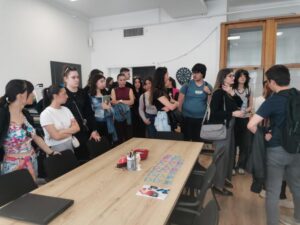
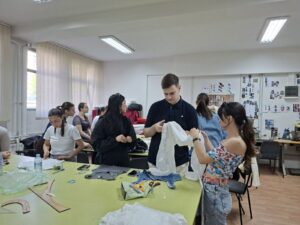
The second part of the workshop focused on practical and applied learning, where Assistant M.Sc. Zorica Cvetkovska introduced participants to garment repair and maintenance techniques as a key strategy for extending product life cycles and supporting circular economy principles. An interactive session further explored responsible behaviour in fashion, where students worked on textile pieces under the guidance and consultation of Prof. Dr. Lidija Georgieva, gaining hands-on experience in sustainable design and reuse approaches.
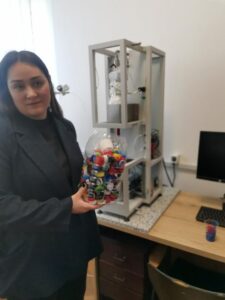
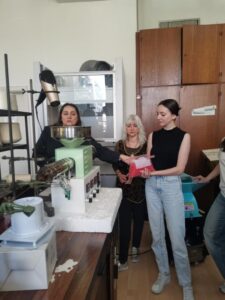
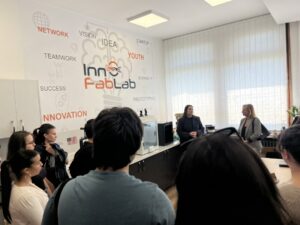
A key element of the programme was the visit to the INNO FAB laboratory, where Assistant Jovana Petkovska presented innovative 3D printing technologies and the use of recycled materials in textile applications. The demonstration highlighted the potential of digital manufacturing tools in reducing environmental impact and supporting innovation in the textile industry.
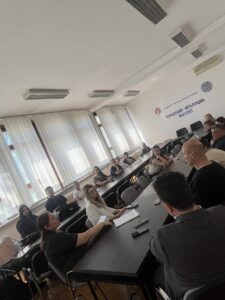
The workshop concluded with a multidisciplinary panel discussion involving experts from textile engineering, inorganic technology, and organic technology, including food technology and biotechnology. The discussion covered critical topics such as the role of the textile industry in environmental pollution reduction, the alignment of higher education with labour market needs, and the importance of engaging young people in innovation and sustainability-driven initiatives.
Particular attention was given to the migration of micro-, meso-, and nanoplastics into food systems, their microbiological implications, and the environmental consequences of industrial processing of synthetic materials on soil and air quality. Prof. Dr. Velichkova discussed the mechanisms of migration of meso-, micro-, and nanoplastics into food, while Prof. Dr. Doneva-Šapceska further expanded the discussion with the microbiological aspects of this pollutant. Prof. Dr. Boškovski and Assoc. Prof. Kostadinova focused on the protection of soil and air as a consequence of the industrial processing of synthetic materials. In conclusion, Prof. Dr. Jordanov highlighted the complexity of the textile and apparel industry and the perspectives for its sustainable development.All professors provided very detailed information on the negative implications of microplastics in water and food, which is highly important.
The workshop represented an important step in strengthening cooperation between academia and industry within the MISSION4WATER project. It contributed to advancing practical knowledge exchange, promoting innovative solutions, and supporting the development of sustainable approaches for water protection and environmentally responsible textile production.
The event served as a multidisciplinary platform combining scientific presentations, practical training, and an interactive panel discussion, fostering knowledge exchange between academia and applied research in sustainable textile development.
The workshop opened with a series of expert presentations focusing on key sustainability challenges in the textile industry. The MISSION4WATER project was introduced by Natasha Sivevska, highlighting its objectives and opportunities for engagement of academic institutions and young professionals. This was followed by a scientific overview of microplastics delivered by Prof. Dr. Vesna Dimova, who explained their sources, distribution, persistence in the environment, and growing ecological significance.
Further presentations included modern sustainable fashion design approaches by Prof. Dr. Lidija Georgieva, focusing on circular design principles and environmentally responsible material selection. Advanced technological solutions were presented by Assistant Jovana Petkovska, who introduced the use of 3D printing with recycled filaments and its potential applications in reducing textile waste and supporting sustainable production systems.
The second part of the workshop focused on practical and applied learning, where Assistant M.Sc. Zorica Cvetkovska introduced participants to garment repair and maintenance techniques as a key strategy for extending product life cycles and supporting circular economy principles. An interactive session further explored responsible behaviour in fashion, where students worked on textile pieces under the guidance and consultation of Prof. Dr. Lidija Georgieva, gaining hands-on experience in sustainable design and reuse approaches.
A key element of the programme was the visit to the INNO FAB laboratory, where Assistant Jovana Petkovska presented innovative 3D printing technologies and the use of recycled materials in textile applications. The demonstration highlighted the potential of digital manufacturing tools in reducing environmental impact and supporting innovation in the textile industry.
The workshop concluded with a multidisciplinary panel discussion involving experts from textile engineering, inorganic technology, and organic technology, including food technology and biotechnology. The discussion covered critical topics such as the role of the textile industry in environmental pollution reduction, the alignment of higher education with labour market needs, and the importance of engaging young people in innovation and sustainability-driven initiatives.
Particular attention was given to the migration of micro-, meso-, and nanoplastics into food systems, their microbiological implications, and the environmental consequences of industrial processing of synthetic materials on soil and air quality. Prof. Dr. Velichkova discussed the mechanisms of migration of meso-, micro-, and nanoplastics into food, while Prof. Dr. Doneva-Šapceska further expanded the discussion with the microbiological aspects of this pollutant. Prof. Dr. Boškovski and Assoc. Prof. Kostadinova focused on the protection of soil and air as a consequence of the industrial processing of synthetic materials. In conclusion, Prof. Dr. Jordanov highlighted the complexity of the textile and apparel industry and the perspectives for its sustainable development.All professors provided very detailed information on the negative implications of microplastics in water and food, which is highly important.
The workshop represented an important step in strengthening cooperation between academia and industry within the MISSION4WATER project. It contributed to advancing practical knowledge exchange, promoting innovative solutions, and supporting the development of sustainable approaches for water protection and environmentally responsible textile production.