
MISSION4WATER Workshop- Sustainable Design Practices in Fashion for Water Protection
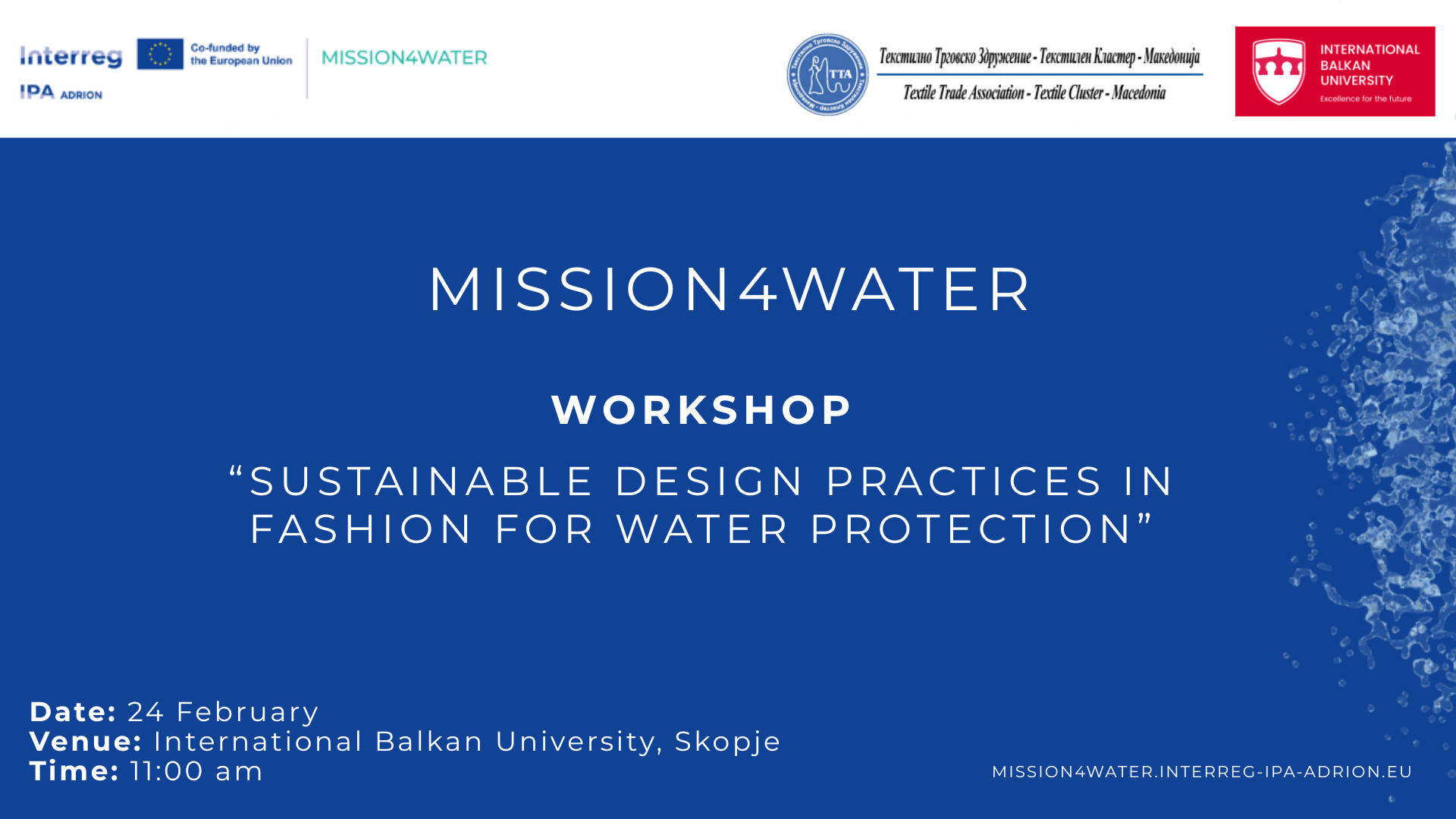
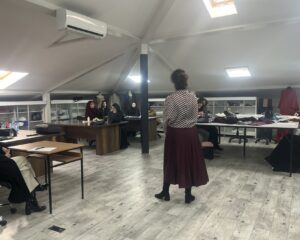
The Textile Trade Association – Textile Cluster, in cooperation with the International Balkan University, organised a workshop within the Mission4Water project titled “Sustainable Design Practices in Fashion for Water Protection” on 24 February 2026 at the Faculty of Art and Design premises, with the aim of raising awareness and promoting sustainable design approaches focused on water protection and pollution reduction in the textile sector.
The event opened with a welcoming speech by Prof. Aleksandra Ristovska, Dean of the Faculty of Art and Design at International Balkan University, who briefly presented the Faculty’s work and previous collaborations, expressing her satisfaction with the cooperation established with the Textile Trade Association – Textile Cluster through this workshop.
This was followed by opening remarks from Natasha Sivevska, Director of the Textile Trade Association – Textile Cluster, who introduced the activities of the Cluster, the current state of the textile industry in North Macedonia, and the importance of circular economy principles. She highlighted the environmental challenges linked to textile production, particularly the issue of microplastics released from textiles, and presented the Mission4Water project and its mission. Emphasis was placed on the importance of raising awareness among young designers about industry challenges and corporate responsibility. The presentation additionally included an overview of the Mission4Water open call for innovative projects and solutions, designed to foster the development and scaling of innovative approaches for water pollution reduction.
Sabina Hadziahmetovic from the Hydro-Engineering Institute Sarajevo (HEIS) delivered an in-depth presentation highlighting how the rapid growth in textile consumption has significantly increased pressure on water resources and ecosystems. She explained how various stages of textile production — particularly wet processing and finishing — contribute to large volumes of contaminated wastewater containing dyes, chemicals, and synthetic particles. Her presentation illustrated how these pollutants travel through wastewater treatment systems, often with limited removal efficiency for microfibres and microplastics, allowing a substantial share to enter natural water bodies. By presenting recent research data and real-world treatment outcomes, she demonstrated the scale of microfiber pollution and its long-term environmental consequences. The session provided participants with a clearer understanding of how everyday textile products are directly linked to water contamination, emphasizing the urgent need for improved treatment technologies, responsible production practices, and preventative measures across the textile value chain.

The academic programme continued with Prof. Maja Gjureska, who focused on textile innovation and responsible water use in fashion design. Her presentation covered the water footprint of textiles, pollution sources in textile production, and the issue of microplastics and microfibres. She emphasized that material choice alone is not enough, underlining that process knowledge plays a crucial role in achieving sustainable outcomes. She further stressed the importance of reducing overall consumption and adopting a holistic approach to design, where every decision — from material selection to finishing processes and product durability — should be carefully considered in relation to its environmental impact. The presentation highlighted the responsibility of designers to think beyond aesthetics and incorporate sustainability across the entire product lifecycle, including strategies that help minimise waste and consequently reduce microplastic release into water systems.
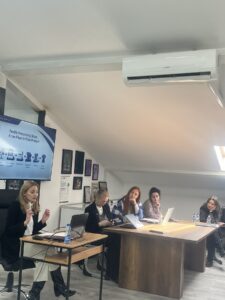
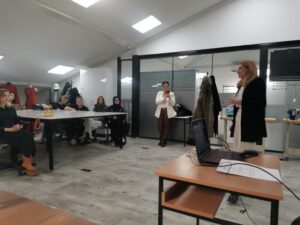
Next, Asst. Prof. Emilija Slavkova presented the role of 3D technology in sustainable design and the optimization of production processes, highlighting how digital tools are transforming the way fashion products are developed. She introduced the concept of the digital design environment as a creative laboratory, where designers can experiment, test ideas, and refine garments without material waste or environmental cost. Through examples of virtual sampling, digital prototyping, and 3D garment visualisation, she demonstrated how physical production can become a final, intentional step rather than a trial-and-error process, significantly reducing unnecessary samples and resource consumption. She emphasized that every physical cut consumes water and materials, while every avoided sample contributes to environmental protection and lowers the potential for microplastic generation, using this insight to raise awareness among students about the responsibility embedded in design decisions and the role of digital tools in supporting more conscious and sustainable fashion development.
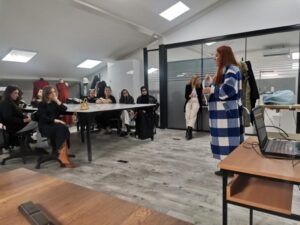
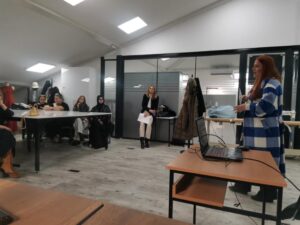
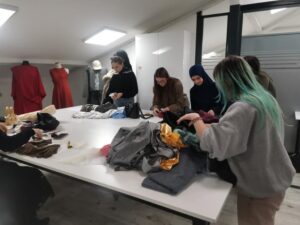
The workshop concluded with an interactive creative session led by Asst. Prof. Medina Hodza, titled “Second Life Textiles: Transforming Garments into Art.” The session introduced students to circular economy R-strategies such as repair, reuse, repurposing, and upcycling, demonstrating how extending the life of textile products can significantly reduce waste and resource consumption and environmental pollution. Through hands-on collage techniques and the use of previously utilised fashion materials, participants explored creative approaches to circular design and experienced how existing resources can be transformed into new value.
A detailed description of the creative workshop session, including the outcomes and students’ works, is available here.
Overall, the workshop successfully combined scientific knowledge, academic perspectives, digital innovation, and creative practice, strengthening participants’ understanding of sustainable design and the role of the textile sector in protecting water resources.
The event opened with a welcoming speech by Prof. Aleksandra Ristovska, Dean of the Faculty of Art and Design at International Balkan University, who briefly presented the Faculty’s work and previous collaborations, expressing her satisfaction with the cooperation established with the Textile Trade Association – Textile Cluster through this workshop.
This was followed by opening remarks from Natasha Sivevska, Director of the Textile Trade Association – Textile Cluster, who introduced the activities of the Cluster, the current state of the textile industry in North Macedonia, and the importance of circular economy principles. She highlighted the environmental challenges linked to textile production, particularly the issue of microplastics released from textiles, and presented the Mission4Water project and its mission. Emphasis was placed on the importance of raising awareness among young designers about industry challenges and corporate responsibility. The presentation additionally included an overview of the Mission4Water open call for innovative projects and solutions, designed to foster the development and scaling of innovative approaches for water pollution reduction.
Sabina Hadziahmetovic from the Hydro-Engineering Institute Sarajevo (HEIS) delivered an in-depth presentation highlighting how the rapid growth in textile consumption has significantly increased pressure on water resources and ecosystems. She explained how various stages of textile production — particularly wet processing and finishing — contribute to large volumes of contaminated wastewater containing dyes, chemicals, and synthetic particles. Her presentation illustrated how these pollutants travel through wastewater treatment systems, often with limited removal efficiency for microfibres and microplastics, allowing a substantial share to enter natural water bodies. By presenting recent research data and real-world treatment outcomes, she demonstrated the scale of microfiber pollution and its long-term environmental consequences. The session provided participants with a clearer understanding of how everyday textile products are directly linked to water contamination, emphasizing the urgent need for improved treatment technologies, responsible production practices, and preventative measures across the textile value chain.
The academic programme continued with Prof. Maja Gjureska, who focused on textile innovation and responsible water use in fashion design. Her presentation covered the water footprint of textiles, pollution sources in textile production, and the issue of microplastics and microfibres. She emphasized that material choice alone is not enough, underlining that process knowledge plays a crucial role in achieving sustainable outcomes. She further stressed the importance of reducing overall consumption and adopting a holistic approach to design, where every decision — from material selection to finishing processes and product durability — should be carefully considered in relation to its environmental impact. The presentation highlighted the responsibility of designers to think beyond aesthetics and incorporate sustainability across the entire product lifecycle, including strategies that help minimise waste and consequently reduce microplastic release into water systems.
Next, Asst. Prof. Emilija Slavkova presented the role of 3D technology in sustainable design and the optimization of production processes, highlighting how digital tools are transforming the way fashion products are developed. She introduced the concept of the digital design environment as a creative laboratory, where designers can experiment, test ideas, and refine garments without material waste or environmental cost. Through examples of virtual sampling, digital prototyping, and 3D garment visualisation, she demonstrated how physical production can become a final, intentional step rather than a trial-and-error process, significantly reducing unnecessary samples and resource consumption. She emphasized that every physical cut consumes water and materials, while every avoided sample contributes to environmental protection and lowers the potential for microplastic generation, using this insight to raise awareness among students about the responsibility embedded in design decisions and the role of digital tools in supporting more conscious and sustainable fashion development.
The workshop concluded with an interactive creative session led by Asst. Prof. Medina Hodza, titled “Second Life Textiles: Transforming Garments into Art.” The session introduced students to circular economy R-strategies such as repair, reuse, repurposing, and upcycling, demonstrating how extending the life of textile products can significantly reduce waste and resource consumption and environmental pollution. Through hands-on collage techniques and the use of previously utilised fashion materials, participants explored creative approaches to circular design and experienced how existing resources can be transformed into new value.
A detailed description of the creative workshop session, including the outcomes and students’ works, is available here.
Overall, the workshop successfully combined scientific knowledge, academic perspectives, digital innovation, and creative practice, strengthening participants’ understanding of sustainable design and the role of the textile sector in protecting water resources.