Annual assembly of the Textile Cluster: Industry analysis, new markets, and modern communication practices – 26.11.2025
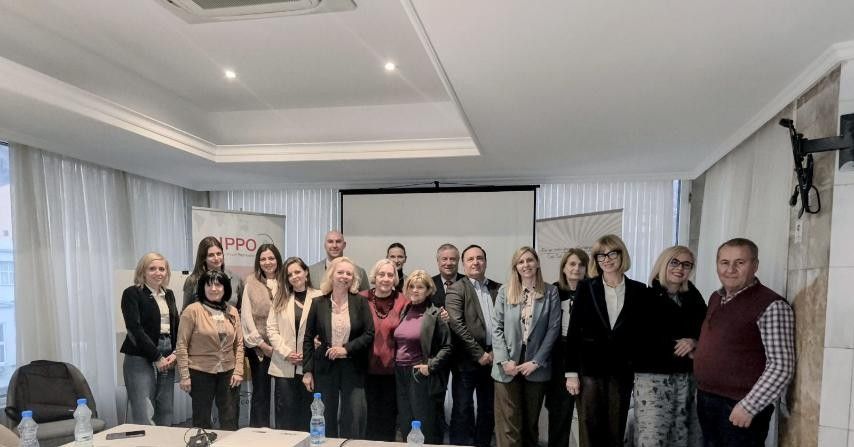
On 26 November 2025, at Hotel Oaza in Štip, the Annual Assembly of the Textile Trade Association – Textile Cluster (TTA–TC) was held, followed by presentations and discussions on the export potential of the Macedonian textile industry, market diversification, and a session dedicated to modern approaches to sustainability communication.
The event opened with introductory remarks by President Marijana Perkovska and Executive Director Natasa Sivevska, who presented to the members the Cluster’s implemented activities, the 2025 financial report, and plans for the upcoming period.
Executive Director Natasa Sivevska, Project Coordinator of both projects, presented two projects funded by the EU IPA Programme (Verdeinmed – IPA EURO MED & Mission4Water – IPA ADRION) that the Textile Cluster is implementing during this period, highlighting their goals and impact, while opening opportunities for potential collaborations and future joint initiatives.
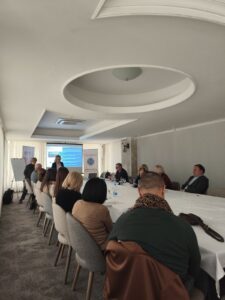
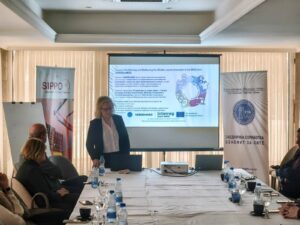
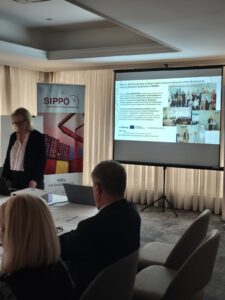
Afterwards, Blagoja Miloshevski, SIPPO Local Consultant for Textiles, delivered a detailed overview of the country’s textile industry, analysing key indicators and the export performance of the past two decades, as well as the competitive positioning of the sector. The session continued with an active discussion among companies, followed by presentations of new markets with export potential and an assessment of their prioritisation.
After the presentation of the methodology for selecting potential new markets, as well as the promotion and market diversification plan, participants discussed challenges and opportunities for export growth, such as costs, technology, and the need for new certifications. Issues faced by the sector were also addressed, including delays in VAT refunds, delays in payments from protective companies, lack of work orders, and the continuous price reductions imposed by foreign clients. It was agreed that together with the Organisation of Employers, a meeting would be requested with the Director of the Public Revenue Office (PRO) regarding VAT refund issues, as well as meetings with the relevant ministries to discuss improving competitiveness. A joint position was also reached with the Organisation of Employers concerning the Labour Law provisions related to sick leave. Members were additionally asked to carefully review the new Draft Law on Professional Rehabilitation and Employment Support for Persons with Disabilities, which introduces several specific requirements, and to provide comments (the proposal was shared by email).
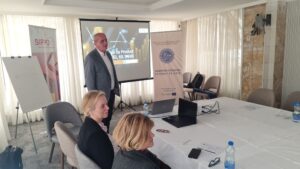
In addition to SIPPO as co-organiser, the event was attended by representatives of the Swiss Embassy and the Swiss Project for the Modernisation and Development of Human Resources, who expressed readiness to support efforts to address some of the presented challenges.
In the second part of the event, Natasa Sivevska and Elena Miloshevska Jovanovska (SIPPO Country Manager for North Macedonia) presented the Sustainable Textile Guide – EU Sustainability Legislation Guide, an important resource for companies adapting to the EU’s new regulatory requirements. This Guide will enable companies to become familiar on time with the criteria that buyers will require in the coming period, and to prepare for the reporting obligations they will need to fulfil. Members will also receive a corresponding form where they can enter the required parameters themselves and track their carbon footprint.
The final session was led by Patrick Collins, SIPPO International Consultant for Marketing, Communication, and Digitalisation, whose expertise and dynamic approach left a strong impression on participants. This intensive training, delivered in English, was carefully designed to help companies practically transform their sustainability efforts and achievements into communication materials that directly support the international sales process.
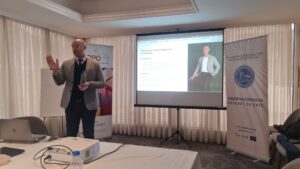
Collins demonstrated how technical and often complex data—such as CO₂ emissions, process improvements, and internal sustainability measures—can be translated into clear, persuasive, and commercially relevant messages sought by European buyers. He trained participants to use AI tools and professionally developed content templates, showcasing best practices for building website copy, LinkedIn campaigns, trade-fair presentations, and buyer-facing communication documents.
His objective was clear and highly strategic: to ensure that sustainability messaging becomes an integral part of companies’ sales strategies, rather than an additional, separate activity. Through concrete, tailored examples and interactive exercises, Collins helped participants quickly develop their own materials ready for immediate use—something essential for increasing competitiveness and credibility in international markets.
The session was evaluated very positively, as companies left not only with new knowledge but also with practical tools and already prepared outputs that they can immediately implement in their sales and marketing activities.
The event concluded with a shared understanding that strategic promotion, market diversification, and modern communication are essential for the further development and competitiveness of the industry. The Textile Cluster will continue to actively support companies in strengthening their export and communication practices.